
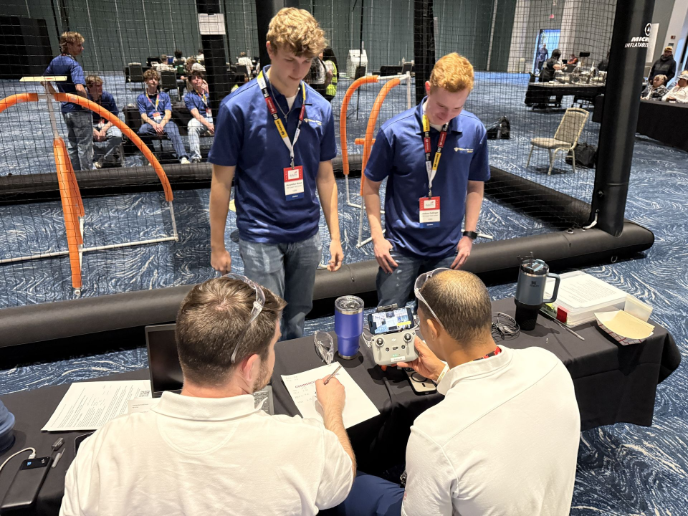
Over the past two months, our team has judged two well known drone competitions outside of Drone Soccer. We approached each experience with an open mind looking not just at student performance, but at how these programs are structured and the skills they develop in students
What we found was both encouraging and revealing.
Two Approaches, Two Different Outcomes
The first competition focused on open ended engineering. Students were encouraged to build their drones from scratch, designing solutions to complete tasks like picking up objects and navigating a course. Teams were larger, typically three to five students, with one designated pilot.
The second competition took a different approach. It was structured around scenario-based challenges, with teams of two operating as if they were professional Part 107 pilots on a job site. The emphasis was on execution, efficiency, and applied flight operations.
On the surface, both competitions were well-designed and aimed at advanced high school drone programs. But the real difference didn’t emerge during the flying portion.
It emerged afterward.
Early Signs of Divergence
The most telling moment came during technical interviews with students.
We asked simple questions:
- Can you name the main components of a drone?
- What features makes a drone suitable for the mission?
We were looking for foundational answers: frame, motors, flight controller, sensors, GPS module, and so on.
This is where the difference began.
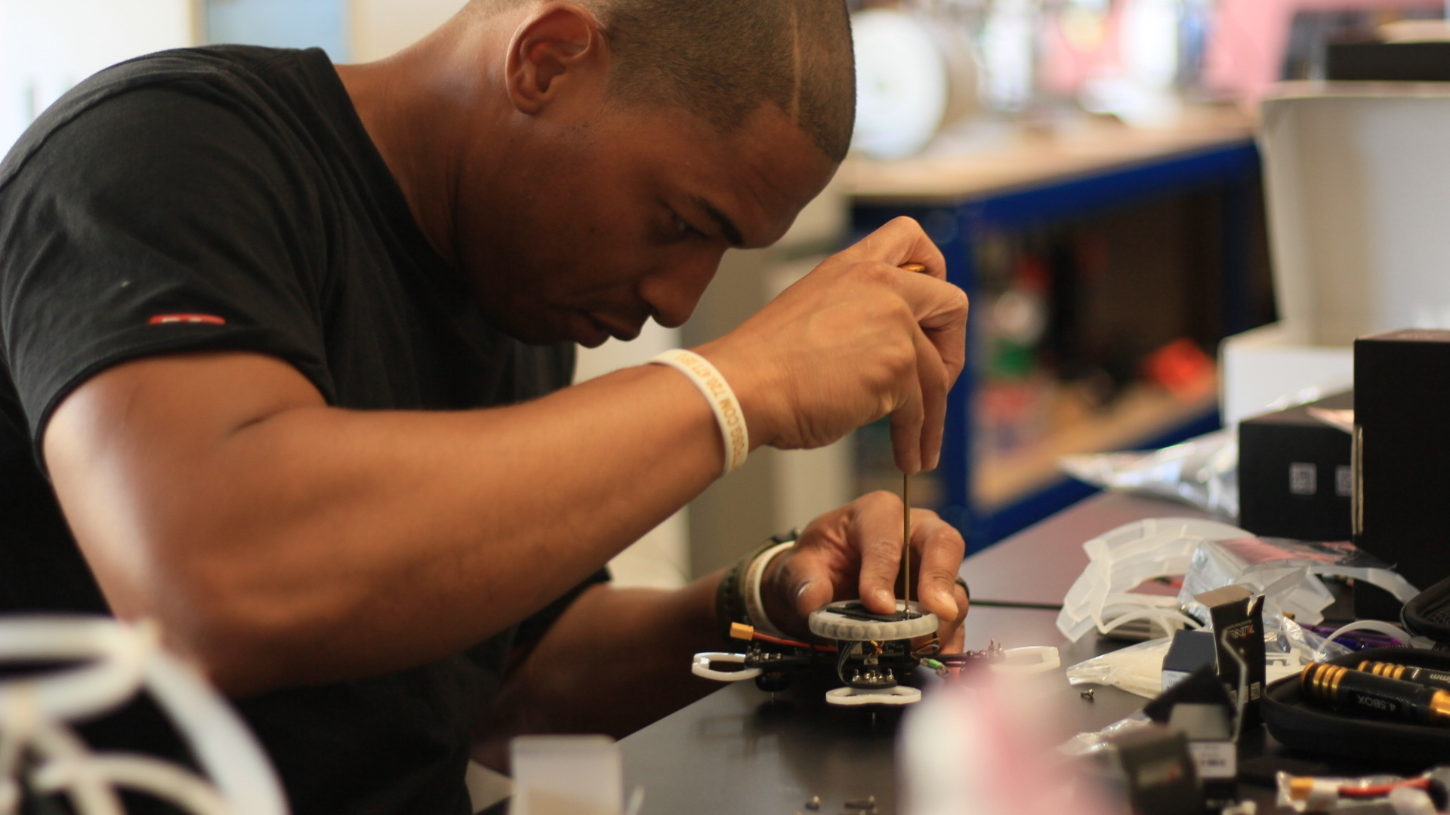
Students who had built their drones or had prior hands on building experience answered with confidence and clarity. Their understanding was not memorized; it was internalized.
Students who had not built their drones often struggled to go beyond surface level explanations.
The difference became even more pronounced when we moved into open ended troubleshooting questions.
The Power of Building
One of the most revealing question we asked appeared simple on the surface:
A friend calls you and says their drone won’t take off. What do you do?
Students with technical experience didn’t rush to an answer, they realized how vague the question was and began hunting for information:
- Are the propellers spinning?
- Is the controller connected?
- Are the batteries charged?
- Are the propellers installed correctly?
- Is the drone powering on?
- Are there software restrictions or alerts?
- Has it flown before?
- Has it taken damage?
This simple question and line of thinking mirrors what we see every day working with customers across the country. It reflects a mindset built on understanding interconnected systems, not just operating them.
And that skillset comes from building and working through issues themselves.
The Same Rules, Different Depth
One example stood out clearly.
In the first competition, one team programmed their flight controller using a Raspberry Pi, an advanced method that, in practical terms, is like building a motorhome in the bed of the family pickup truck. The level of build knowledge required to get it to work is significant, and in today’s workforce, that skill set is immediately valuable.
Unfortunately, their drone experienced a technical issue and was unable to fly, resulting in immediate disqualification.
Other teams solved the same challenge using a sub $100 off-the-shelf flight controller, allowing them to focus their time elsewhere.
Same rules. Different solutions. Very different depth of understanding.
What's Missing and What Matters
The second competition offered building as an option, but it was more of a suggestion. Nearly all teams chose drones pre-built from the store, prioritizing polished performance over understanding.
Both approaches have value. But what stood out most was this:
Technical depth, confidence, and problem-solving ability were consistently strongest in students who had built their systems.
Not because they were better pilots but because they understood why things worked.
Or didn’t.
The Bigger Picture
Drone competitions are powerful. They inspire students, create engagement, and simulate real-world scenarios in high pressure environments and it does it in ways the traditional classroom cannot. But as the space continues to evolve, we have an opportunity to ask a deeper question:
Are we training students to complete tasks or to understand systems?
Students who understand systems are the ones who will adapt, innovate, and lead. Competitions and programs like Drone Soccer offer a well rounded approach that is simple to understand, accessible for the earliest beginner, and lays the groundwork to grow using a consistent repeatable architecture.
If you know of a program interested in getting started, we would be happy to discuss different ways to get started this summer and ready to play in the fall.