
From Career Path to
Career-Tool
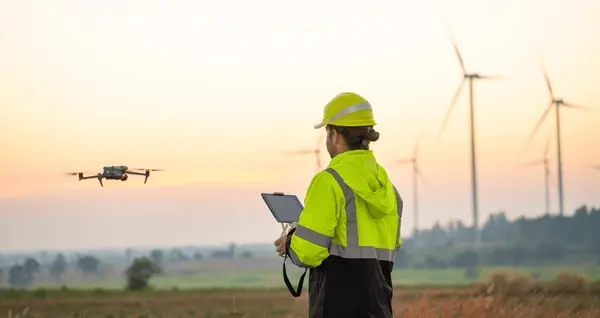
For years, the standard approach to drone education has been clear: teach students to become drone pilots, prepare them for a Part 107 certification, and open the door to a career in drone operations. That model made sense a decade ago—when commercial drone use was new and specialists were in demand. But the world has changed. Today, drones are no longer the career—they’re the tool.
The Shift in Focus
In the early days, a single pilot with a drone could carve out a niche career in aerial imaging or surveying. But now, as drones have become mainstream across industries, the need has shifted from drone specific jobs to professionals who integrate drones into their existing roles.
It’s the police officer who gets certified to use a drone for accident reconstruction.
The insurance agent who uses it to assess storm damage.
The farmer who relies on it for precision agriculture.
The Engineer who conducts bridge inspections.
The technology has matured and so must be the way we teach it.
What This Means for Schools
For educators and program directors, this shift changes everything. Schools can no longer treat drones as a one size fits all pathway. Instead, they need to teach drones as a cross-disciplinary tool that complements a variety of career and technical fields.
That means aligning drone education with CTE programs, STEM classes, and career clusters—from agriculture and public safety to media and environmental science. The most successful schools are those that go wide before they go deep, building a foundational understanding of drone systems, regulations, and applications before specializing in one or two focus areas. This may mean getting a Part 107 much later than one would expect.
Trying to cover every possible industry application is not realistic. Budgets, equipment, and instructional time are limited. Schools that identify one or two relevant sectors—and connect drones to their existing curriculum will create stronger, more sustainable programs.
Building a Foundation Through Drone Soccer
This is where Drone Soccer plays a pivotal role. Drone Soccer isn’t just a competition—it’s a training ground for foundational drone operations. Students learn the core principles that underpin every drone application: propulsion systems, flight control, battery management, and repair skills. They practice teamwork, communication, and safety procedures in a hands-on, competitive setting that keeps engagement high.
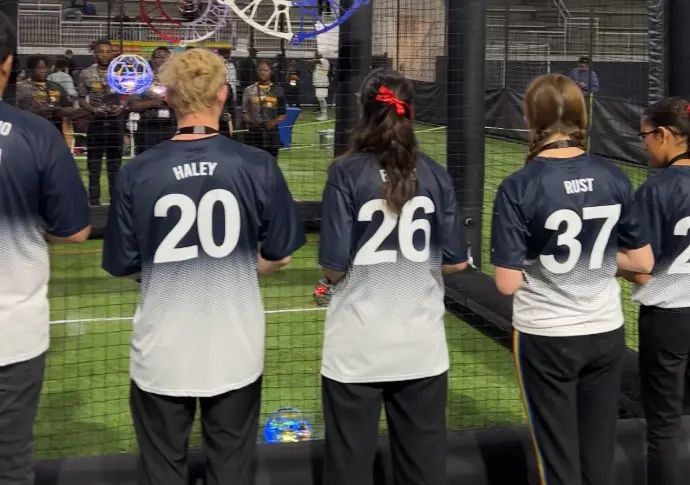
These experiences provide the essential building blocks that allow students to later “go deep” into industry-specific applications—whether it’s aerial surveying, agricultural analysis, or cinematic production. Drone Soccer gives educators a low barrier, high impact entry point to introduce drones into their programs without needing to commit to a single industry track from the start.
By first mastering the fundamentals through Drone Soccer, schools can confidently expand into specialized areas with a solid technical and educational foundation. It’s an approach that not only prepares students for emerging technologies but also ensures that drone education remains relevant, adaptable, and rooted in real-world skills.